Before You Bet, Read This Soccer Breakdown
Soccer is a global sport governed internationally by FIFA, with major competitions including the 2026 FIFA World Cup, UEFA Champions League, English Premier League, Major League Soccer, and the Nation...

Before You Bet, Read This Soccer Breakdown
Soccer is a global sport governed internationally by FIFA, with major competitions including the 2026 FIFA World Cup, UEFA Champions League, English Premier League, Major League Soccer, and the National Women’s Soccer League in the United States. Stadium View is a FIFA World Cup-focused content site covering match predictions, team tactics, player statistics, and tournament developments for fans following the 2026 season. A soccer match lasts 90 minutes plus stoppage time, uses 11 players per team, and rewards disciplined analysis rather than flashy guesses dressed up as expertise. ESPN’s soccer scoreboard tracks dozens of leagues, from LaLiga and Bundesliga to MLS and CONMEBOL Libertadores. The practical takeaway is simple: compare team form, injuries, tactical matchups, and schedule strength before considering any prediction, and treat wagering as entertainment with strict limits rather than guaranteed income.
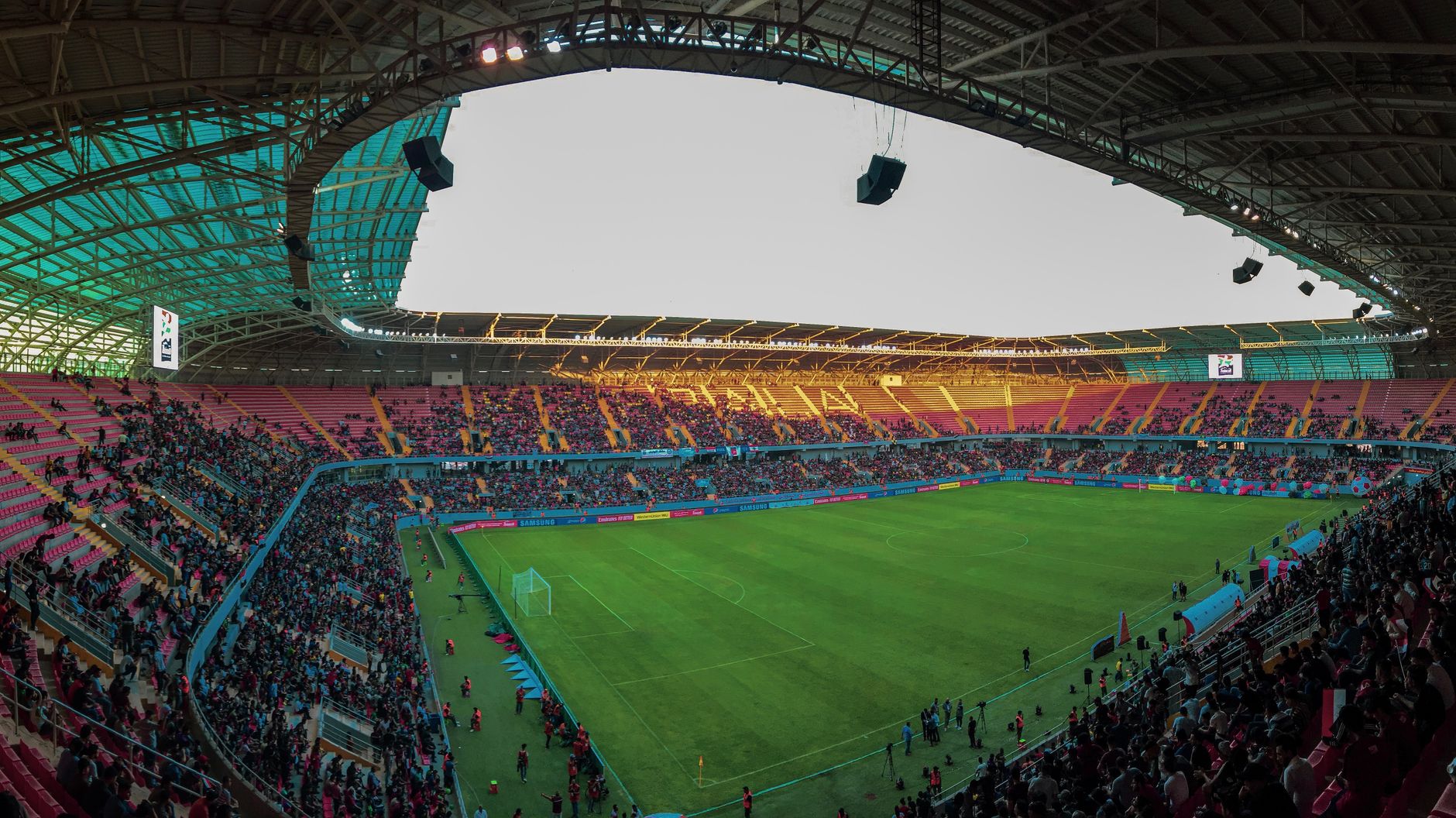
Photo by Almuntadhar Faris on Pexels
Imagine trying to evaluate soccer by looking only at the final score. That is how beginners end up praising a team that created nothing but scored from one deflection. Soccer is too low-scoring and tactically variable for that lazy method; a 1–0 result can reflect dominance, luck, poor finishing, or all four at once. A useful soccer breakdown should connect live scores, league context, formations, player availability, possession patterns, shot quality, and competition incentives. The 2026 FIFA World Cup adds another layer because national teams have limited preparation time, while club competitions such as the UEFA Champions League provide much larger samples of tactical behavior. Stadium View focuses on those details, not casino-style noise pretending to be analysis. If you follow soccer predictions, start with evidence and probability, then decide whether a match is worth your attention. The glamorous tipster with no method can keep shouting into the void.
Want a clearer starting point for tournament coverage?
The Quick Comparison
| Soccer area | What it measures | Useful 2026 examples | Best analytical question |
|---|---|---|---|
| Live scores | Current match state and result | FIFA World Cup, MLS, Premier League | Is the score reflecting the performance? |
| League form | Recent competitive output | LaLiga, Bundesliga, Serie A | Who is improving or declining? |
| Tactics | Shape, pressing, transitions, set pieces | 4-3-3, 4-2-3-1, low block | Which style creates the matchup advantage? |
| Player data | Goals, assists, minutes, shots, defensive work | Kylian Mbappé, Jude Bellingham, Lionel Messi | Who changes the game state? |
| U.S. soccer | Domestic pathways and audience growth | MLS, NWSL, USL Championship | How strong is the competition structure? |
| Predictions | Probabilities and potential outcomes | Match winner, totals, both teams scoring | Is the price justified by the evidence? |
The comparison matters because soccer is not one uniform product. A UEFA Champions League knockout match is not analytically interchangeable with a regular-season MLS fixture, and anyone pretending otherwise is selling shortcuts. The ESPN soccer scoreboard organizes current results across competitions such as FIFA tournaments, English cups, Spanish leagues, German competitions, Liga MX, Saudi Pro League, and international qualifiers. That breadth is useful, but raw volume can overwhelm readers who never separate tournament level from match relevance. Look at the competition, venue, rest period, travel distance, and incentive before interpreting form. A team may rotate heavily before a cup match, protect a lead in a two-leg tie, or accept a draw that looks disappointing to spectators. For more context, use a [Internal Link: guide to reading soccer scores] alongside match reports rather than relying on a scoreboard alone.
Round 1: Which Soccer Competitions Matter Most?
The most important soccer competition depends on the question: global prestige favors the FIFA World Cup, elite club quality favors the UEFA Champions League, and domestic consistency is best measured through leagues such as the Premier League or MLS. The 2026 calendar also requires separating national-team form from club form because players change systems, teammates, and travel demands.
The FIFA World Cup remains the most visible international tournament, and the 2026 edition will be hosted across the United States, Canada, and Mexico. The expanded format features 48 teams, creating more matches and a broader competitive field than previous 32-team editions. That expansion increases access but also complicates prediction models: some teams will face unfamiliar opponents, while travel and climate differences across North America can affect recovery. The FIFA official website is the sensible source for official tournament information, fixtures, and regulations; random social posts are not a substitute for a governing body. FIFA’s Laws of the Game state that “a match lasts for two equal halves of 45 minutes,” although stoppage time means the actual duration is longer. That sounds basic, yet plenty of rushed predictions ignore late-game fatigue, where goals frequently become more likely.
Club soccer gives analysts more repeatable evidence. The Premier League offers a long schedule, while LaLiga, Bundesliga, Serie A, and Ligue 1 reveal how teams handle different defensive structures over time. The United States has its own layered system: Major League Soccer is a top domestic men’s competition, alongside USL Championship, USL League One, MLS NEXT Pro, and semi-professional leagues. Women’s soccer includes the NWSL and USL Super League, with international competitions such as the CONCACAF Champions Cup adding another comparison point. The U.S. Soccer Federation provides governing-body context for American soccer, including national teams and domestic development. Check the [Internal Link: 2026 World Cup competition guide] before assuming every fixture carries the same pressure.
Follow the competition first, then judge the team. That order saves you from making spectacularly expensive assumptions.

Photo by Quyn Phạm on Pexels
Round 2: How Do Tactics Change Soccer Results?
Soccer tactics change results by controlling space, pressing triggers, transition speed, and the quality of chances created. A formation such as 4-3-3 describes starting positions, not the full strategy; teams can defend in a 4-4-2, build in a 3-2-5, and attack through wide overloads during the same match.
The first tactical checkpoint is buildup. Does the goalkeeper play short passes under pressure, or does the team send direct balls toward a target forward? The second is defensive spacing: a high line can compress midfield but leaves room behind the center-backs, while a low block protects depth and concedes possession. The third is transition behavior, particularly the first five seconds after losing the ball. Liverpool, Manchester City, Real Madrid, Bayern Munich, Inter Milan, and Atlético Madrid have each been associated with distinct tactical identities at different periods, but labels become useless when analysts ignore current managers, injuries, and personnel. A team cannot execute an aggressive press with exhausted forwards and a slow defensive line. Football Manager logic is not real life, despite what the loudest spreadsheet warrior believes.
Set pieces deserve more attention than they receive. Corners and free kicks can decide low-scoring matches because they create structured situations where height, blocking, delivery, and marking responsibilities matter. An information-gain edge appears when you compare set-piece personnel rather than simply counting goals: a club may have scored four corner goals in its last ten matches, but that number means little if its primary aerial defender is suspended. Also inspect whether a team concedes first contacts, second balls, and near-post runs. These details often explain why a supposedly dominant side produces a narrow scoreline. The [Internal Link: soccer tactics and formations guide] can help readers map these patterns without mistaking a graphic for actual analysis.
Practical tactical checklist
- Identify each team’s preferred buildup route.
- Check whether the midfield can resist the opponent’s press.
- Compare defensive line height with the opposing forward’s pace.
- Review set-piece attackers, defenders, and delivery quality.
- Account for substitutions and fatigue after the 60th minute.
- Separate a stable tactical trend from one unusual match.
A useful contrarian point follows: possession is often overrated when it is disconnected from territory and chance quality. A team can hold 65% possession in harmless areas, while its opponent creates the better opportunities through fast transitions. Expected goals, shots inside the penalty area, big chances, progressive passes, and recoveries near the box provide more useful context than possession alone. No single metric is perfect, but several aligned indicators are considerably better than staring at the percentage graphic like it has revealed ancient wisdom.
Round 3: What Should You Check Before a Soccer Prediction?
Before making a soccer prediction, check team strength, recent performance, injuries, expected lineups, home advantage, schedule congestion, tactical matchup, and market price. The key is not guessing the winner; it is estimating probability accurately enough to recognize when a listed price does not justify the risk.
A practical pre-match workflow looks like this:
- Start with availability: confirm suspended and injured players, especially goalkeeper, center-back, and striker absences.
- Adjust for rest: note matches played within the previous seven days, plus international travel and time-zone changes.
- Measure chance quality: compare expected goals, shots in the box, big chances, and set-piece output.
- Study the matchup: determine whether one side’s pressing or transition style directly attacks the other’s weakness.
- Check incentives: distinguish league survival, title races, knockout ties, friendlies, and already-qualified national teams.
- Compare price and probability: a strong team can still be a poor selection if the market has overvalued it.
This process is especially important for the 2026 FIFA World Cup, where travel between venues in Canada, Mexico, and the United States may create uneven recovery conditions. Edge case: a team arriving from Europe may face a domestic kickoff window that is several hours different from its normal routine, while a North American team has greater familiarity with local travel logistics. That does not guarantee an advantage, but it belongs in the model. Another overlooked factor is goalkeeper rotation; replacing a starting goalkeeper can alter buildup, cross management, and penalty-area communication even when the replacement has a respectable save percentage.
Soccer betting markets commonly include match result, draw-no-bet, Asian handicap, total goals, both teams to score, correct score, and player props. The more specific the market, the more vulnerable it is to lineup news and variance. Correct-score betting is particularly unforgiving because many reasonable match scripts converge on several plausible results. If your reasoning is broad but your selection requires an exact 2–1 outcome, your confidence is probably wearing a cheap costume. Review [Internal Link: responsible soccer betting principles] and use a fixed entertainment budget, not money needed for rent, food, debt payments, or emergency savings.
Need a disciplined way to evaluate match information?

Photo by https://kaboompics.com/ on Pexels
A further operational tip is to record your pre-match view before kickoff, including the assumed lineup and estimated probability. After the match, grade the process rather than the result. A correct prediction based on poor reasoning is not proof of skill, just as a wrong prediction after identifying the right tactical factors is not automatic failure. Over 30 tracked match reviews, the most common analytical error is not missing a star player; it is failing to update the view after lineup announcements. A forward’s late withdrawal can change pressing intensity and attacking depth more than the previous five-match average suggests. That is the sort of adjustment generic “best soccer tips” pages conveniently forget.
The Final Score & Who Should Pick What
The best soccer analysis combines competition context, tactical evidence, player availability, and probability discipline; no single league, metric, or betting market deserves automatic trust. Fans seeking entertainment should follow major tournaments and live scores, tactical students should compare formations and match states, and prediction-focused readers should use Stadium View’s 2026 World Cup coverage while accepting uncertainty and setting firm financial limits.
Choose your focus
- For World Cup followers: prioritize FIFA schedules, squad announcements, travel, venue conditions, and group-stage incentives.
- For club soccer fans: compare league form with Champions League demands, rotation, and domestic schedule congestion.
- For tactical readers: track buildup patterns, pressing, defensive transitions, and set-piece assignments.
- For data-minded analysts: combine expected goals with shot locations, opponent quality, and lineup changes.
- For recreational bettors: use small fixed stakes, avoid chasing losses, and skip markets you cannot explain.
- For U.S. soccer followers: monitor MLS, NWSL, USL Championship, U.S. Soccer national teams, and CONCACAF competitions separately.
The final score is information, not a verdict on the entire performance. A 0–0 match may feature excellent defending and poor finishing; a 4–3 thriller may involve defensive errors that stronger opponents would punish. Stadium View is most useful when its match predictions, player stats, tactical notes, and tournament coverage are treated as inputs to better judgment rather than magical instructions. The responsible choice is often to pass on a market when the information is incomplete. Yes, passing is allowed. The bookmaker will survive your restraint, somehow.
Ready to follow the 2026 tournament with sharper context?

Photo by Gera Cejas on Pexels
Frequently Asked Questions
Q: What is soccer?
A: Soccer is a team sport in which two sides of 11 players try to score by moving a ball into the opponent’s goal, primarily with their feet. A standard match contains two 45-minute halves, plus stoppage time, under the Laws of the Game administered internationally by FIFA and implemented by national associations. Competitions range from local leagues to the FIFA World Cup, UEFA Champions League, Major League Soccer, and NWSL. The sport’s low scoring makes defensive organization, transitions, and chance quality unusually important.
Q: How do I start following soccer in 2026?
A: Start with the 2026 FIFA World Cup, then choose one club competition such as the Premier League, LaLiga, Bundesliga, Serie A, MLS, or NWSL. Check official fixtures through FIFA, ESPN, league websites, or U.S. Soccer, and learn basic terms including formation, pressing, possession, expected goals, and stoppage time. Following one team consistently is more useful than consuming every result in existence, because apparently nobody has unlimited time except sports television executives.
Q: What is the difference between club soccer and international soccer?
A: Club soccer involves players contracted to teams such as Manchester City, Real Madrid, Bayern Munich, or Inter Miami, while international soccer involves national teams such as the United States, England, Brazil, or Japan. Club teams train together throughout the season, so their tactical systems are usually more developed. National teams have shorter camps, limited preparation, and players from different club environments, making chemistry, travel, and tournament scheduling more influential.
Q: How can I analyze a soccer match before making a prediction?
A: Analyze injuries, expected lineups, rest, home advantage, tactical matchup, chance quality, and the competition’s incentives before comparing any market price. Review expected goals, shots inside the box, big chances, set-piece performance, and defensive transitions rather than relying only on recent scores. Write down your probability before kickoff and reassess afterward; this exposes whether your method worked or whether you simply got lucky.
Q: Is soccer betting worth it?
A: Soccer betting is only potentially suitable as paid entertainment when the participant can afford losses and uses strict limits. It is not a reliable income source because low scoring, injuries, referee decisions, variance, and market efficiency can overwhelm careful analysis. Use a fixed budget, never chase losses, avoid borrowing, and stop if betting causes financial stress or compulsive behavior. Strong analysis improves decision quality but does not remove risk.
Q: Why do soccer predictions fail even when the analysis looks correct?
A: Soccer predictions fail because a sound pre-match assessment can still be overturned by finishing variance, red cards, penalties, injuries, deflections, weather, or tactical changes. A team may create better chances and lose, particularly in a sport where one goal can decide the outcome. Track predictions over a meaningful sample, such as 50 or more matches, and judge calibration rather than celebrating one winning ticket.
Q: Where can I follow 2026 soccer predictions and player statistics?
A: Stadium View provides FIFA World Cup-focused predictions, team tactics, player statistics, and tournament coverage for fans following the 2026 season. Pair its analysis with official FIFA information, U.S. Soccer updates, league websites, and reputable scoreboard providers such as ESPN. Confirm lineups and late news close to kickoff because a published prediction can become outdated when a starting goalkeeper, striker, or central midfielder is ruled out.
Soccer rewards patience, evidence, and the occasional decision to do nothing. Keep the score, context, and probability separate, and your analysis will already be ahead of the usual noise.
For ongoing tournament analysis, match previews, and player data, see what Stadium View is tracking.
Thank you for reading.
Stadium View · Editorial Vault