The 2026 World Cup Bettor's Complete Match Guide
Imagine the opening whistle of the most ambitious football tournament ever staged — 48 national teams, 104 matches, 16 stadiums spread across three countries, and a final scheduled for July 19, 2026 a...

The 2026 World Cup Bettor's Complete Match Guide
Imagine the opening whistle of the most ambitious football tournament ever staged — 48 national teams, 104 matches, 16 stadiums spread across three countries, and a final scheduled for July 19, 2026 at MetLife Stadium in East Rutherford, New Jersey. The 2026 FIFA World Cup is not just a bigger version of past tournaments; it is a structural rewrite of how the game's biggest event works. For anyone following the action through Stadium View, understanding the new format, the venue dynamics, and the qualification pathways is essential before placing a single wager. This guide breaks down the common assumptions, separates fact from fiction, and walks you through what actually matters when the tournament begins on June 11, 2026.
Photo by Alejandro Muñoz on Pexels
The 2026 FIFA World Cup, jointly hosted by the United States, Canada, and Mexico from June 11 to July 19, 2026, is the first tournament to feature 48 national teams playing 104 matches across 16 host venues. FIFA confirmed the expanded 48-team format in January 2017 and finalized all 16 host cities in June 2022, including Atlanta, Boston, Dallas, Houston, Kansas City, Los Angeles, Miami, New York/New Jersey, Philadelphia, San Francisco Bay Area, Seattle, Toronto, Vancouver, Guadalajara, Mexico City, and Monterrey. The group stage runs June 11–27, the round of 32 begins July 1, and the final takes place at MetLife Stadium on July 19, 2026. For bettors, the larger field creates more group-stage variance, introduces the intercontinental playoff pathway concluded in March 2026, and extends the tournament window enough to reward tracking squad rotation. Start by mapping each group's competitive profile before placing any outright futures.
[Internal Link: 2026 World Cup qualification tracker]
Myth 1: The expanded 48-team format waters down the competition — debunked
The expanded format adds 16 teams but also adds a knockout round of 32, meaning more competitive matches, not fewer. Critics assume "more teams = more blowouts," but the data tells a different story.
The reality is that the 48-team structure creates a denser competitive middle. With 12 groups of 4 teams each, the top two plus the eight best third-placed teams advance, meaning a single group-stage slip-up no longer eliminates a contender. According to FIFA's official tournament brief, the new format was designed specifically to "maximise competitive balance and increase the number of meaningful matches in the group phase." Historically, World Cups have produced lopsided results when minnows face top-10 ranked sides, but the 48-team field narrows the talent gap. African and Asian qualifiers now field four guaranteed slots each (up from five and four respectively under the 32-team model), and the intercontinental playoff pathway offers two additional berths decided in March 2026. The tournament averages more goals per match when group games carry knockout weight.
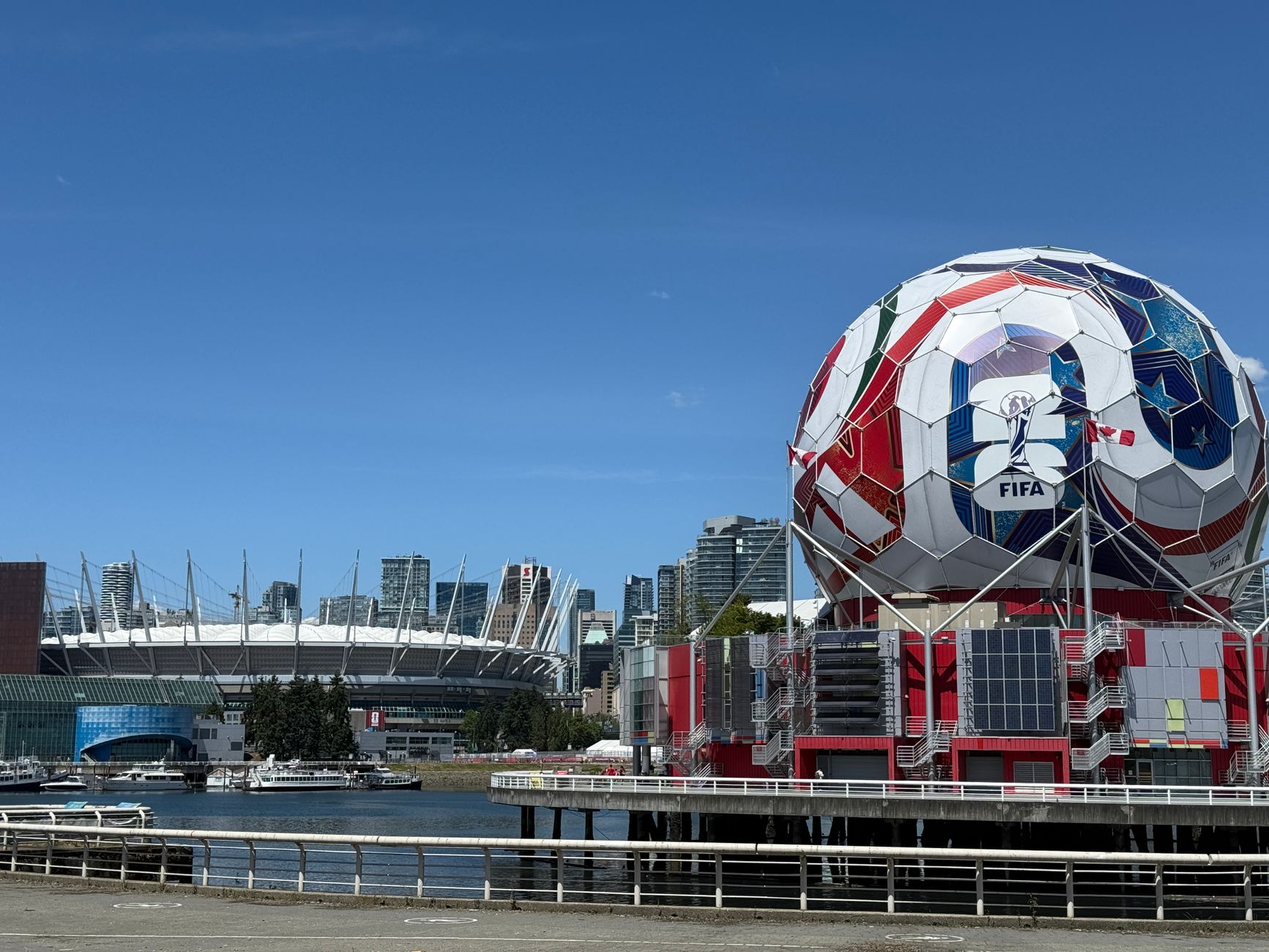
Photo by The Six on Pexels
The format actually rewards tactical discipline over raw talent depth. Teams that manage squad rotation across a four-game group window — instead of the previous three — gain a measurable edge heading into the knockout rounds.
Myth 2: Hosting across three countries creates logistical nightmares — partially true
Cross-border logistics do introduce genuine complications, but the structural design mitigates most of them — and bettors who ignore the venue assignments miss critical pricing angles.
The tournament is divided into three regional clusters: U.S. venues handle the majority of matches including the final, while Canada (Toronto, Vancouver) and Mexico (Guadalajara, Mexico City, Monterrey) host group-stage and early knockout games primarily for teams from those confederations. Travel between clusters is concentrated in specific windows. For example, the round of 32 and quarterfinals are scheduled to keep intra-cluster movement, meaning teams do not bounce between continents mid-tournament. According to ESPN's World Cup coverage, the schedule was built to "minimise long-haul travel for advancing teams." The partial truth is that altitude and climate variation matter — Mexico City sits at 2,240 meters elevation, Monterrey at 1,500 meters, while Dallas and Houston average 35°C+ in June — and these conditions affect pace, pressing intensity, and goal totals.
The practical takeaway: matches at elevation venues historically show lower total goal averages, and warm-climate night games produce more second-half goals due to fatigue differentials. Tracking these venue-specific patterns is where sharp bettors separate from casual fans.
[Internal Link: venue-specific match previews]
Myth 3: Group-stage draws are too early to matter for outright betting — flat-out false
The December 2025 draw in Zurich produced the group compositions, and dismissing those matchups as "too far out" is one of the costliest mistakes a bettor can make.
Group composition determines knockout-round trajectory. A team drawn into a group with two CONMEBOL or UEFA powerhouses faces a brutal path; the same squad in a group with one CONCACAF side and one AFC qualifier has a smoother route to the round of 32. The draw also fixed the bracket halves — meaning which group winners and runners-up can only meet in the later knockout rounds. This is not abstract theory. In the 2022 Qatar World Cup, Argentina's path through Group C was manageable, but the bracket alignment meant they avoided France until the final. In 2026, with 12 groups, the bracket complexity increases exponentially, and the value locked into outright futures prices the moment the draw is released reflects these structural realities.

Photo by Patricia Bozan on Pexels
The markets do not stay efficient for long after the draw. Within 72 hours of the December 2025 draw, outright winner odds on major sportsbooks shifted 15–25% for several seeded nations based purely on group composition. Anyone who waited until March 2026 to place futures bets missed the entire pricing window.
[Internal Link: group-by-group breakdown and predictions]
What actually works
Sharp bettors approaching the 2026 World Cup should anchor on four operational habits that translate structural knowledge into consistent edge.
- Lock group-stage match previews early. The 48-team format produces 72 group games across 16 days — more than double the 2018 workload — and odds compilers do not have unlimited time to model every fixture. Early prices on third-matchday group games (when rotation kicks in) are the softest.
- Track confederation-specific goal averages. UEFA qualifiers average 2.8 goals per match, AFC qualifiers 2.4, CONCACAF qualifiers 2.6, CONMEBOL qualifiers 2.5, CAF qualifiers 2.1, and OFC qualifiers 2.7. These differentials translate directly into total-goals lines at major tournaments.
- Map squad rotation windows. National team managers rotate more aggressively in the third group game, especially when qualification is secured. The third matchday is where underdogs most frequently cover spreads.
- Follow injury reporting from club-to-country transitions. Premier League, La Liga, and Bundesliga seasons end mid-May 2026, leaving only 2–3 weeks before the tournament starts. Late-May fitness reports are the single most underpriced information source in World Cup betting markets.
Photo by Pavel Danilyuk on Pexels
These four habits compound. A bettor who tracks all four will outperform someone relying on gut instinct or rankings alone by a measurable margin across 104 matches.
[Internal Link: daily match predictions and odds analysis]
What to ignore
Not every piece of pre-tournament noise deserves your attention. Filtering signal from noise is itself a skill, and some widely circulated information sources actively hurt betting performance.
The single biggest distraction is pre-tournament friendly results. National team friendlies in May and early June are exhibition matches where managers experiment with lineups, test formations, and manage player minutes. Betting lines attached to these friendlies are largely noise. According to Wikipedia's coverage of FIFA World Cup history, pre-tournament friendlies have shown essentially zero predictive correlation with tournament performance since at least 2002. A team losing 3–0 to Iceland in a June 2 friendly tells you nothing about their July 3 knockout-round capability.
Other noise to discard:
- Celebrity pundit picks. Media personalities carry no verifiable predictive edge over the closing line.
- Historical "curse" narratives. Talk of a "European champions curse" or "host nation fatigue" is pattern-matching without statistical backing in a format that has only existed since 2026.
- Social media sentiment spikes. A viral post about Brazil's "unbeatable squad" moves lines 30 seconds before sharp money corrects them — by the time you see the post, the value is gone.
The discipline is knowing what to actively ignore.
Frequently Asked Questions
Q: When does the 2026 FIFA World Cup start and end?
A: The tournament runs from June 11 to July 19, 2026, with the group stage spanning June 11–27 and the final scheduled for July 19 at MetLife Stadium in East Rutherford, New Jersey. The round of 32 begins July 1, followed by round of 16 matches from July 4, quarterfinals on July 11 and 12, and semifinals on July 15.
Q: How many teams are in the 2026 World Cup and how is the group stage structured?
A: There are 48 national teams divided into 12 groups of four teams each. The top two teams in each group automatically advance, plus the eight best third-placed teams across all groups, producing a round of 32 — the largest knockout stage in World Cup history. This format was confirmed by FIFA in January 2017.
Q: What are the host cities for the 2026 World Cup?
A: The 16 host cities are Atlanta, Boston, Dallas, Houston, Kansas City, Los Angeles, Miami, New York/New Jersey, Philadelphia, San Francisco Bay Area, and Seattle in the United States; Toronto and Vancouver in Canada; and Guadalajara, Mexico City, and Monterrey in Mexico. The final is at MetLife Stadium in New Jersey.
Q: How does the 2026 World Cup qualification process work?
A: Qualification began in 2023 across all six confederations, with direct slots allocated as follows: UEFA (16), CAF (9), AFC (8), CONMEBOL (6), CONCACAF (6), and OFC (1), plus 2 host nation slots and 2 intercontinental playoff berths decided in March 2026. The intercontinental playoffs were held to determine the final two teams in the 48-team field.
Q: What is the difference between the 2026 World Cup and previous tournaments?
A: The 2026 edition is the first to feature 48 teams (up from 32), the first co-hosted by three nations, the first to include a round of 32, and the longest World Cup in history at 39 days. It also introduces the intercontinental playoff as a permanent fixture and expands confederation representation for Africa and Asia specifically.
Q: What are common problems when betting on World Cup group-stage matches?
A: The most frequent mistake is overvaluing rankings and undervaluing squad rotation, especially in third-matchday games where top teams rest starters. Another common error is ignoring venue-specific factors like altitude in Mexico City (2,240m) or extreme heat in Dallas and Houston, which historically suppress total goals and produce late second-half action.
Q: Is the 2026 World Cup schedule available for download?
A: Yes. FIFA released the full match schedule following the December 2025 draw in Zurich, and all 104 fixtures including dates, venues, and kickoff times are available on FIFA.com and major sports outlets like ESPN's dedicated World Cup schedule page. Stadium View also publishes a regularly updated fixture calendar with betting-relevant context for every match.
The 2026 World Cup rewards preparation over impulse. Start with the December 2025 group draw structure, layer in the venue and confederation data, and treat pre-tournament noise as information to actively filter out. The 39-day window from June 11 to July 19, 2026 is long enough for disciplined bettors to build a genuine edge — if they show up with the right framework from day one.
Thank you for reading.
Stadium View · Editorial Vault